
Checking Criminal History in Livingston County
Start by defining the record needed. The Livingston County Clerk and the court clerks handle prosecution files and certified outcomes. The Livingston County Sheriff's Office keeps reports it creates and county jail material. A village police department, the State Police, or SUNY Geneseo Police remains the custodian of its own incident report. New York's Office of Court Administration and Division of Criminal Justice Services answer different statewide questions.
Gather the full name, exact spelling, date of birth when the channel lawfully asks for it, the likely court, and an approximate year. A docket, indictment, ticket, incident, or report number can cut false matches. Then follow the record, not just the name:
- Ask the local clerk to search the criminal index and identify the court of origin.
- Use WebCrims as a free supplement, while treating a blank result as inconclusive.
- Order OCA CHRS only when its statewide public court-data scope fits the question.
- Request the police narrative or booking material from the agency that created it.
- Obtain a Certificate of Disposition from the originating court when a certified outcome matters.
- Use DCJS fingerprint review to inspect and, if needed, challenge your own official New York record.
The county's Find Records page shows why routing comes first. Its official record map sends court, sheriff, and administrative requests to different custodians.
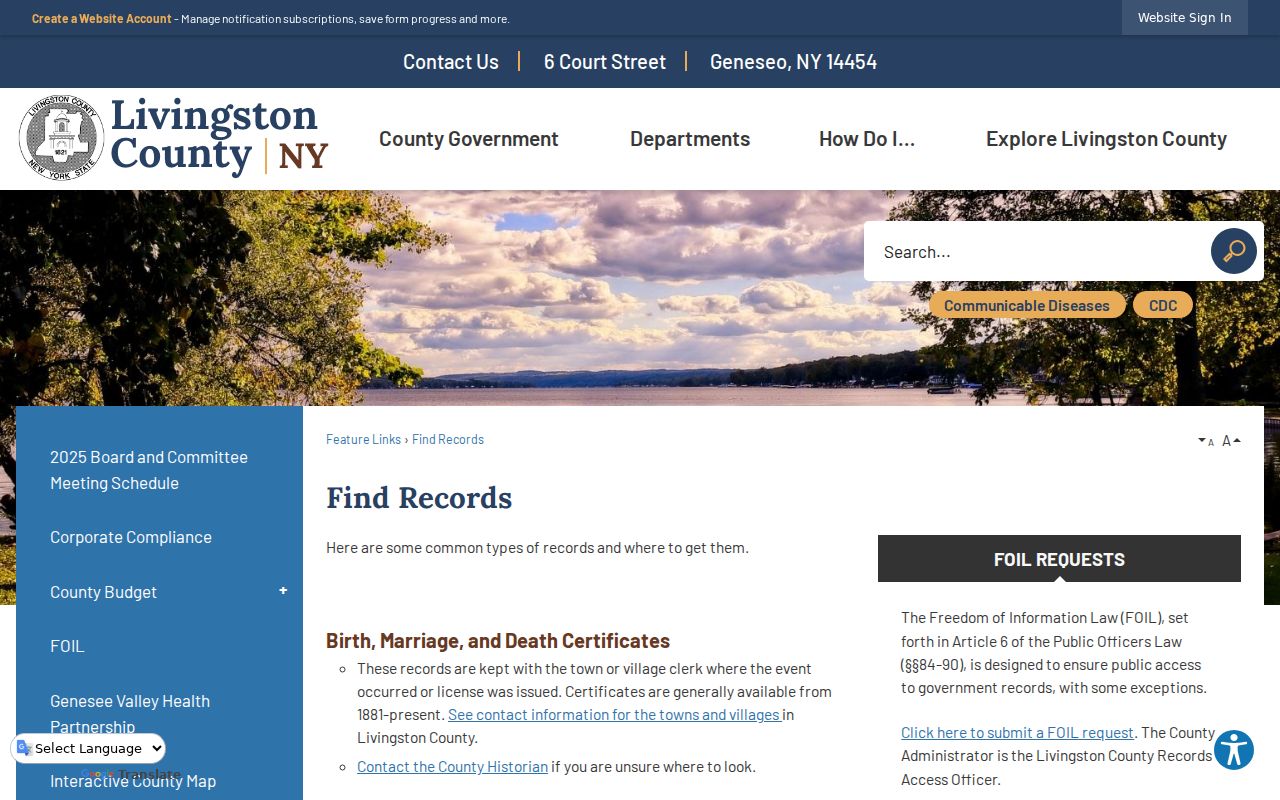
That division prevents a common dead end: asking the county FOIL officer for a judicial file that only a court clerk can release.
Livingston Criminal Records on Court Street
Livingston County concentrates several record offices within one Geneseo block, yet each counter has a separate legal role. Courts, the District Attorney, and court operations are at 2 Court Street. The Sheriff's Office and jail are at 4 Court Street. County Clerk, Probation, Public Defender, Records Management, and county administration are at 6 Court Street. A short walk does not merge their files.
Courthouse
2 Court Street
Geneseo, NY 14454
585-243-7063
Supreme, County, Family, and Surrogate's Courts
Sheriff and Jail
4 Court Street
Geneseo, NY 14454
585-243-7100
Reports, jail booking, and custody
County Clerk
6 Court Street
Geneseo, NY 14454
585-243-7010
Criminal index and superior-court files
County materials list ordinary Government Center hours as 8:00 a.m. to 4:00 p.m., but courts and individual counters set their own schedules. Confirm access before traveling. The County Clerk's official page describes the criminal index and limits on file inspection.
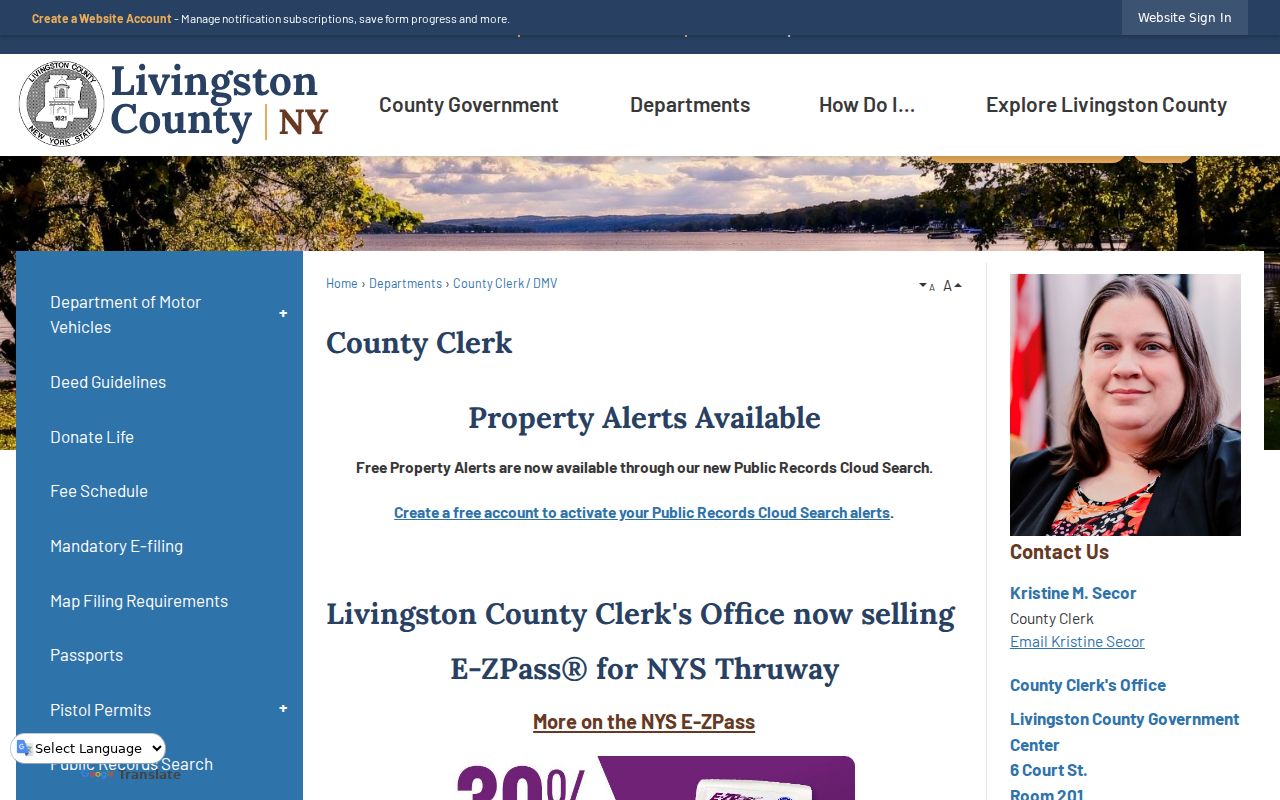
The index may identify a case even when the public cannot inspect a sealed, youthful-offender, or other restricted file.
New York Official Background Checks
New York offers two official products that are often confused. OCA Criminal History Record Search, or CHRS, is a public exact-name and date-of-birth search of electronic criminal court data. It costs $95 for each name and DOB combination. The result is not certified, is not fingerprint matched, and is not an FBI or DCJS rap sheet. Separate aliases or dates of birth create separate paid searches.
DCJS Personal Record Review is the official fingerprint-supported self-review channel. The subject, or the subject's attorney, submits fingerprints through IdentoGO by IDEMIA and chooses a suppressed or unsuppressed response. No one can use that service to request another person's DCJS history. An unsuppressed response lets the subject see sealed or suppressed categories that may help with correction work.
| Channel | Identity method | Best use |
|---|---|---|
| Livingston clerk | Name, case details | Local index, file, certified disposition |
| OCA CHRS | Exact name and DOB | Public statewide electronic court history |
| DCJS review | Fingerprints | Your own official New York record |
The IdentoGO scheduler reveals sites after the service code and ZIP are entered. Research did not verify a stable enrollment office inside Livingston County, so use the official scheduler rather than relying on an assumed storefront.
The DCJS record-review screen is the authoritative source for the current service code and response choices.
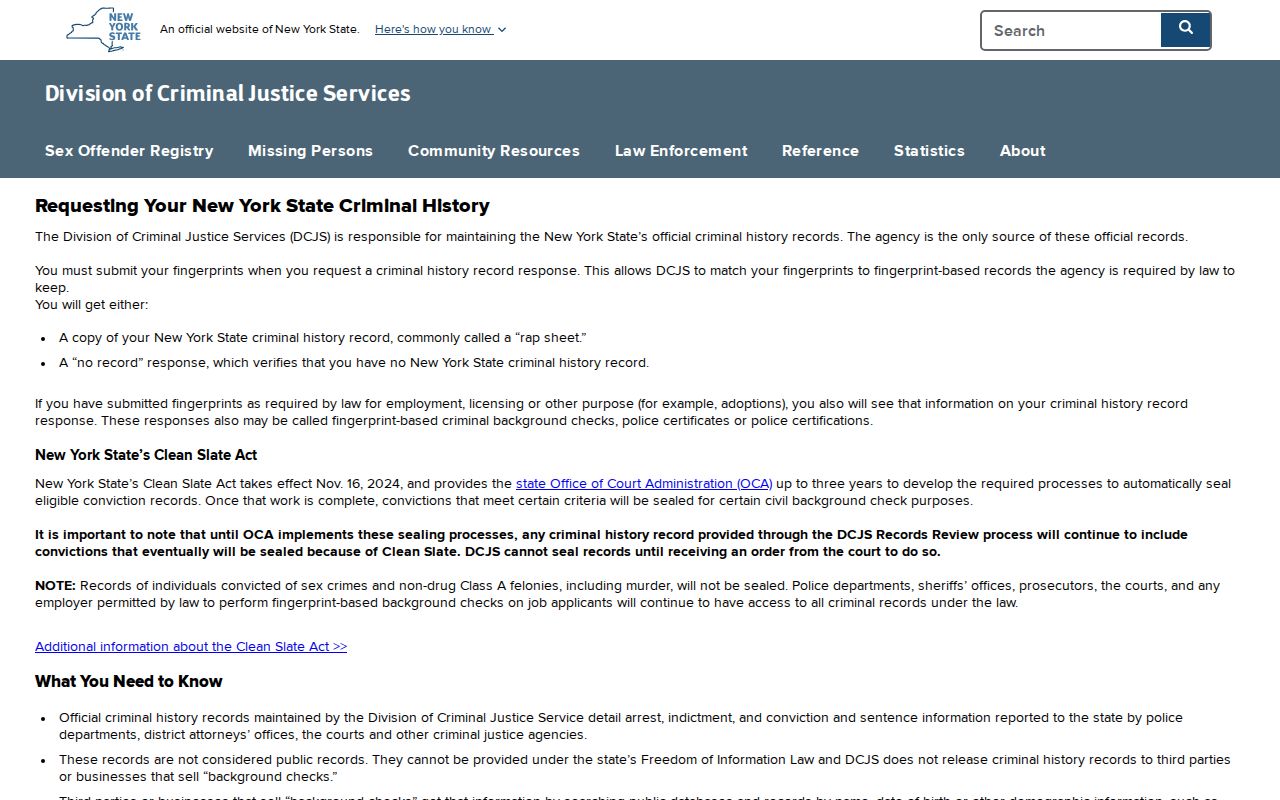
DCJS also explains how to challenge an incomplete arrest cycle or a disposition that never reached the repository.
Livingston Criminal History Search Gaps
A zero-result search is not the same as proof that no record exists. WebCrims availability depends on the court, while OCA CHRS excludes sealed matters, federal and Family Court cases, noncriminal violations, qualifying pardoned matters, and several other categories. OCA also reports important local-court gaps: town and village dispositions are unavailable for May 1991 through 2002 and limited for 2002 through 2007. That gap carries extra weight in a county where justice courts handle many arraignments and lower-level cases.
CHRS uses exact names and dates of birth. A spelling change, alias, or wrong DOB can split results. Potential matches receive staff review, while a no-result online request may return at once. OCA generally sends reviewed results the next business day. Confirm every material outcome with the originating court and request a Certificate of Disposition if a certified result is needed.
| CHRS field | Requirement | Search effect |
|---|---|---|
| Subject full name | Required | Exact match; variants are not added automatically |
| Date of birth | Required | Each alternate DOB is another search |
| Alias | Optional | Charged as a separate $95 request |
| For emailed result | Mail results need a stamped return envelope |
Note: Livingston County town and village clerks remain essential when electronic statewide coverage is incomplete.
Criminal Record Types
A criminal record is not one document. It is a chain made by several offices. The incident report records an allegation and officer response. Jail intake creates a booking and custody file. The prosecutor files a complaint, information, or indictment. The court creates a docket and final disposition. DCJS later links fingerprint-supported arrests to reported outcomes.
- Incident and arrest reports: held by LCSO, a village police department, State Police, or SUNY Geneseo Police.
- Booking records: created by the Livingston County Jail when a person enters local custody.
- Court case files: held by the originating justice court or the County Clerk for superior-court matters.
- Rap sheets and CHRS reports: separate state products with different identity methods and coverage.
- Custody and supervision records: split among LCSO, County Probation, and New York State DOCCS.
Registry entries are another distinct record class. DCJS publishes Level 2 and Level 3 entries online, while Level 1 checks use the registry telephone line. None of these documents alone proves the full course of a case.
Livingston Criminal Records by FOIL
The Livingston County Sheriff's Office Records Division is the practical fallback for a sheriff-created report. Contact Records at 585-243-7140, fax 585-243-7104, or use the online LCSO FOIL form. The form asks for the requester's name, contact details, address, date, and a specific description of records to inspect or copy.
Identify the incident type, date and time range, location, report number, involved agency, and desired format. Ask separately for the narrative, booking record, CAD or 911 material, body-camera video, photographs, or crash report. Each item may follow a different search, retention, redaction, and fee path. Reports made by Geneseo, Dansville, Mount Morris, State Police, or SUNY Police must go to that agency instead.
The Sheriff's directory lists the records, patrol, and corrections contacts.
The directory confirms that the jail and Records Division share an agency but answer different record questions.
Inside a Livingston County Criminal Record
Read every field in context. Names, aliases, DOB, NYSID, and fingerprints help identify the right person. An arrest cycle may show the arrest date, agency, charges received, and a tracking number. A court file adds the accusatory instrument, appearances, motions, plea or trial result, and sentence. Booking data supplies intake and release facts that may never appear in the filed case.
| Name and identifiers | Names, aliases, DOB, NYSID, and fingerprint-linked identity where authorized |
|---|---|
| Arrest and booking | Agency, arrest date, intake time, booking number, received charge, and release status |
| Charges | Statute, offense text, class, count, and any amended charge |
| Disposition | Conviction, dismissal, acquittal, sealing, or another final result |
| Sentence | Jail, prison, probation, fine, surcharge, restitution, or supervision terms |
| Custody status | County jail, DOCCS facility, parole status, release date, or local probation reference |
A charge is an accusation. A disposition is the court's result. Compare both before drawing a conclusion, especially when a booking charge changed after arraignment or grand-jury action.
Livingston Jail Records Without a Roster
Livingston County does not publish a verified public online jail roster. For current custody, call the Jail Division at 585-243-7180 with the full name and an approximate booking date. Ask what status can be released. Use LCSO FOIL for a releasable booking record. The jail at 4 Court Street holds pretrial detainees and people serving local sentences, with stated capacity for up to 194 people.
State prison is a separate system. The DOCCS Incarcerated Lookup searches eligible state custody records by DIN, NYSID, or name. It can show facility, admission, sentence, and release or parole eligibility data, subject to removal and exclusion rules. The state Parolee Lookup covers supervision after release.
The official DOCCS lookup illustrates the state-level path after a county case leads to prison.
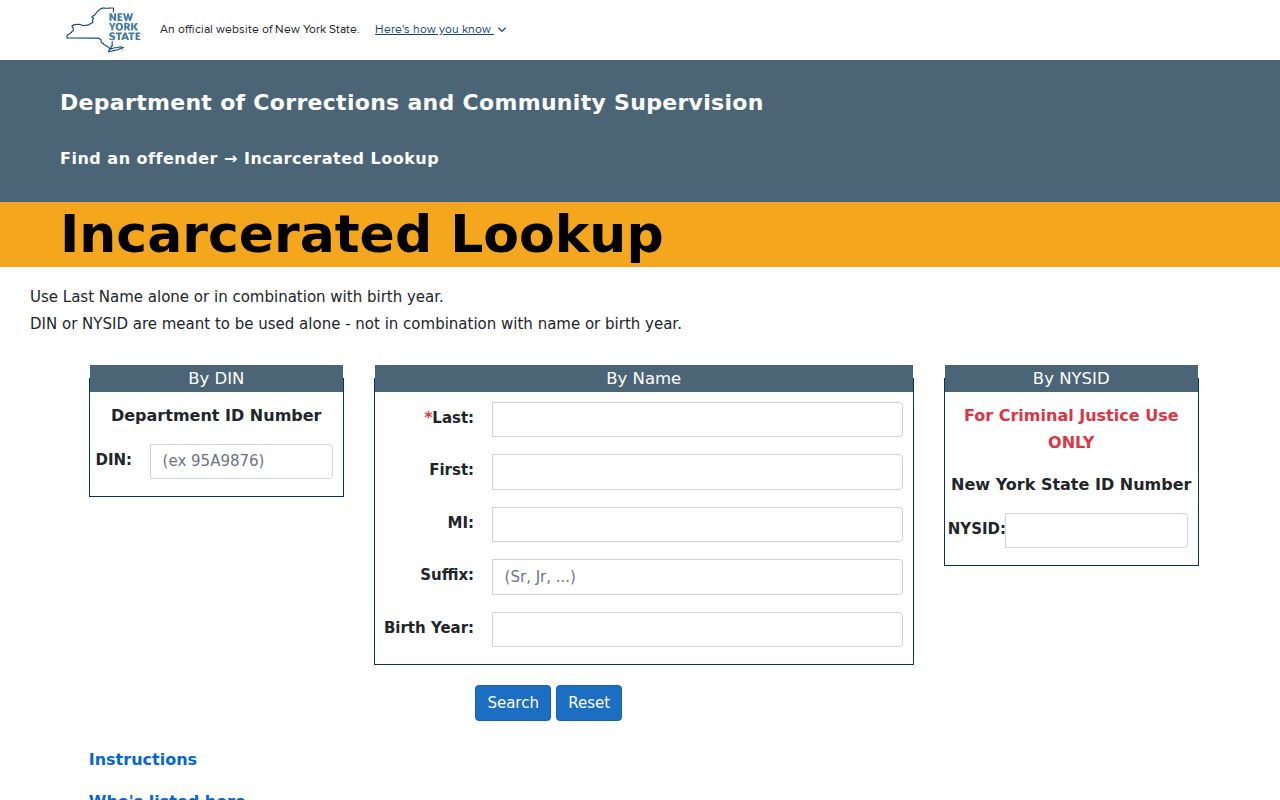
A county jail call, a DOCCS profile, and a court disposition answer different stages of the same record trail.
Public Access Laws in New York
The New York Freedom of Information Law governs agency records, including police material, but court files follow judicial access rules. Under FOIL, an agency generally must grant access, deny in writing, or acknowledge a request within five business days. An acknowledgment gives an approximate response date. The law does not override sealing, privacy, active-investigation, informant, or safety restrictions.
Key New York laws:
Public Officers Law Article 6 governs requests for county and police agency records.
Judiciary Law §255 directs clerks to search and certify court records subject to lawful limits and fees.
CPL 160.50 seals specified records after a favorable termination.
CPL 160.57 creates Clean Slate automatic sealing for eligible convictions.
Correction Law Article 6-C sets sex-offender registration and public-disclosure rules.
A well-described request may still produce redactions. Juvenile, youthful-offender, victim, medical, sealed, and investigative details can remain withheld. A written denial should identify the reason and appeal route.
Livingston Warrant Records Need Verification
No official public Livingston County warrant database or sheriff app was verified. WebCrims silence cannot confirm that no warrant exists. Call the Sheriff's non-emergency line at 585-243-7100 or Records at 585-243-7140 to ask about the permitted verification process. Never use 911 for a record question.
Also contact the court that may have issued the warrant. A town or village bench warrant may remain on that local docket and may never become a County Court case. A precise FOIL request can seek releasable material, though an active or sealed warrant may be withheld. When liberty or bail consequences are possible, counsel can contact the issuing court before an appearance.
- Bench warrant
- A judge's order that often follows a missed appearance or failure to comply.
- Arrest warrant
- An order authorizing custody on a criminal charge.
- Search warrant
- Authority to search a specified place or item, not a public people-search record.
Only the issuing court can state how to address its order and when the official record has been recalled.
Sealed, Expunged, and Restricted Records
New York usually calls record relief sealing. Favorable-termination records generally seal under CPL 160.50, and youthful-offender records are confidential. Application sealing under CPL 160.59 can cover up to two eligible convictions, no more than one felony, after the statute's ten-year period. The exclusions include sex offenses, violent felonies, Class A felonies, and other listed crimes.
Clean Slate under CPL 160.57 took effect November 16, 2024. OCA has a three-year implementation window. Eligible misdemeanor convictions use a three-year clock and eligible felony convictions use an eight-year clock, generally measured from release from incarceration or sentence when there was no incarceration. Pending charges and current probation or parole stop eligibility, and authorized justice or fingerprint-based channels retain statutory access.
Start with the court of conviction. County and Supreme Court matters route through the Livingston County Clerk, while a village or town conviction begins at that justice court. After an order, check the public court result and your own DCJS response. Use the DCJS challenge process if an eligible record or wrong disposition remains.
Livingston Criminal Records in Treatment Court
Livingston County Treatment Court can make a docket look different from a quick conviction-and-sentence path. The county describes a 12-to-24-month program for qualifying participants with nonviolent drug-related offenses. It combines judicial supervision, testing, weekly court and probation reports, service, treatment, and rehabilitation. Eligibility is not automatic.
At its 52nd graduation in February 2026, the program recognized eight graduates. Its working team includes County Court, the District Attorney, Public Defender, Probation, Sheriff, County Clerk, treatment staff, Mental Health and Community Services, and nonprofit providers. Repeated appearances may therefore reflect program review and supervision. They do not by themselves show a new arrest or a final result.
Use the docket and final Certificate of Disposition to distinguish participation milestones from the case outcome. Probation case files are not open public files: the county's published request form says case records require a court order.
Livingston County Criminal Records by City
Livingston County has no incorporated cities, so the local pages cover its three largest incorporated villages. Each village police department keeps its own reports, while its justice court keeps local dockets and dispositions. County booking runs through LCSO, and an indicted felony may move to County Court and the County Clerk. The generic site label “City Guides” does not change each municipality's legal status.
Geneseo Criminal Records
Village police, SUNY Police, Village Court, and the county-seat record campus use separate channels.
Dansville Criminal Records
Village police reports and Village Court outcomes begin at the Clara Barton Street offices.
Mount Morris Criminal Records
Village, county, and state-park jurisdiction must be identified before requesting a report.
When an incident involved State Police or another agency, request the narrative there even if booking took place in the Livingston County Jail.
Historic Livingston Criminal Court Records
Livingston's court record trail reaches far beyond modern portal coverage. The county identifies criminal indexes and predecessor-court holdings tied to its 1821 creation, including Common Pleas records from 1821 to 1910 and Oyer and Terminer series for parts of the nineteenth century. These holdings support genealogy and local-history research that a current-name CHRS request cannot replace.
Begin with the County Clerk or county records and historian channel. Give a name, approximate year, likely town, and any known case or volume reference. Older terminology and court structure differ from current County Court practice, so ask staff which series contains the proceeding. Public access still depends on the condition, indexing, and legal status of the file.
The practical lesson remains the same across two centuries: identify the court and the type of document before ordering a search. A historic indictment, a docket entry, a jail register, and a modern fingerprint record come from different record series.